
How Previous Result Records Are Maintained Online
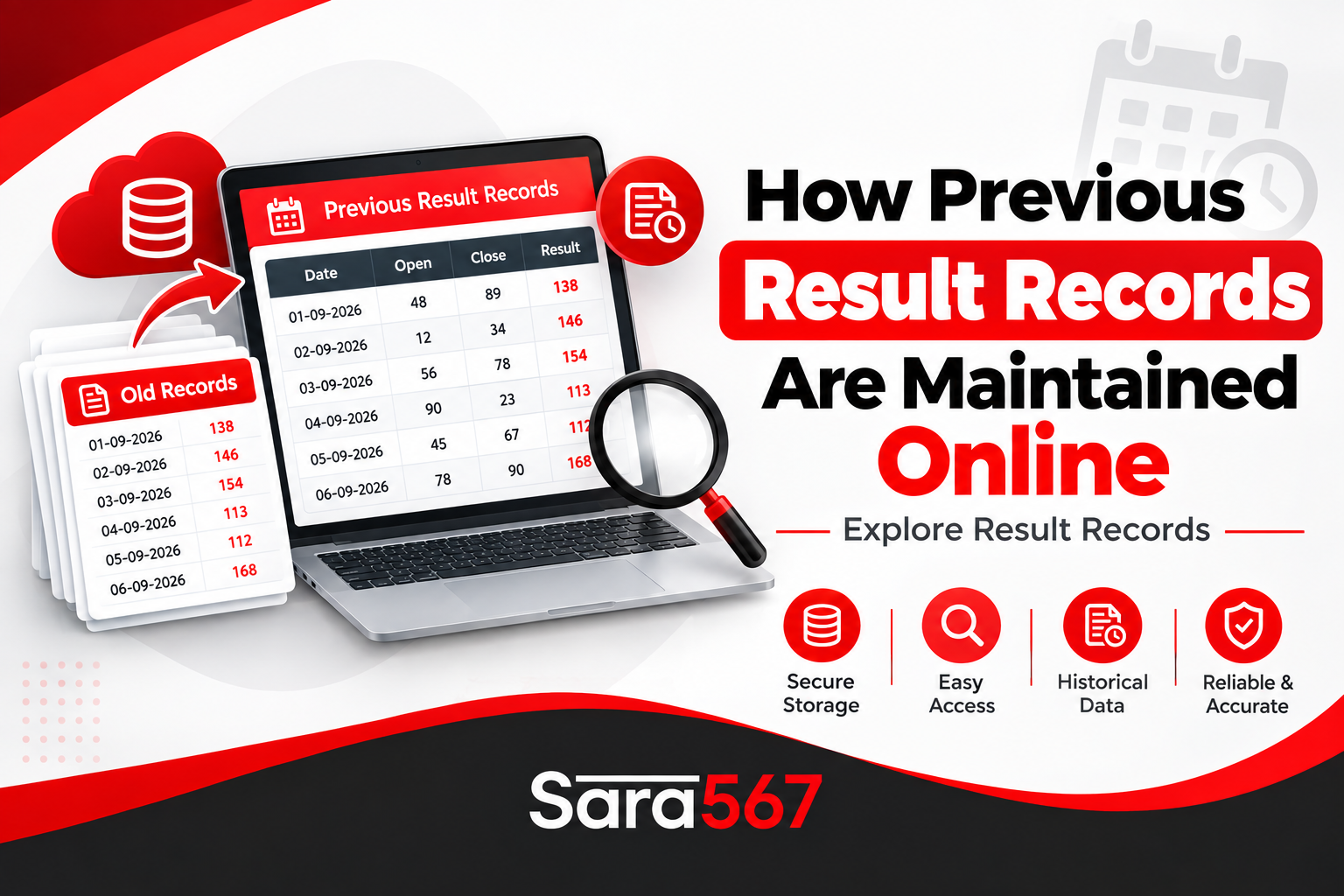
If you've ever attempted to locate a particular result a couple of days back, you'll know the frustration it causes to go through endless webpages. If you don't have a proper way to organize your numbers quickly turn into an overwhelming wall of words.
This is where online archives are available. Sites that keep track of historical information depend on digital layouts that are structured to save previous matka results documents. Through the grouping of daily results by date, time and even market names they allow users to review previous results without the need to put the information together completely from scratch.
What Are Previous Matka Result Records?
The basic idea behind them is that results from previous draws are digital records of previous draws. Instead of eliminating old results at the end of each session the websites store these results as a database that is chronological.
Consider it an electronic ledger. When a day's session is wrapped over, the open number as well as the close number and the combined numbers are recorded in a growth sheet. It allows anyone to see the events that occurred on a particular day three months ago like examining yesterday's figures.
Why Are Previous Results Kept Online?
A continuous log of the past results serves several simple and practical purpose:
- Quick Retrieval: Many readers require a lookup of an older date to determine what was recorded.
- Centralized Data: Storing all data within one central location prevents the user from needing to look through several sources.
- Layout Familiarity: Looking over old records can help beginners learn how charts are organized prior to reading more complex tables.
- Effective Archiving: Platforms keep old pages, so that they don't need to publish older numbers each when someone requests historical data.
How Online Result Records Are Usually Organized
A majority of websites don't put numbers on a webpage. They arrange them in logical order in order to let you sort through decades of information with just a couple of steps.
Common layout patterns include:
- The Date-Wise logs are arranged strictly according to the calendar day.
- Market-Wise columns: The records are categorized with particular terms used in the marketplace (e.g. Morning, Day or night sessions).
- Daily and monthly views: Summary that combine seven days or whole months into one grid.
- Special Result Charts: Dedicated pages focusing on only certain two-digit and three-digit combinations.
In the case of example, if you're looking to locate results from the 15th of August, it isn't necessary to go through the whole calendar. Simply select the specific area from the directory, then scroll to August and then locate that row for 15 August.
What Information Can Appear in an Old Result Record?
The layouts of tables vary based on the site you are visiting Most tables have the following columns:
| Record Type | What It Usually Shows |
|---|---|
| Date-wise record | Every day's results are organized chronologically by calendar days. |
| Record of the market | Results that are grouping under a certain session's name (e.g. Day, Night and Night). |
| Jodi chart | The two-digit combination of the past that were recorded week-by-week. |
| Panel / Pana chart | Three-digit, precise closing and opening combinations as well as singles. |
Based on how comprehensive the website's content is, one entry could show only the last two-digit set or be broken down into the complete ending and opening three-digit sets.
Date-Wise Records Make Older Results Easier to Find
Sorting historical information by dates is the most efficient method to ensure archives remain accessible. When the data is organized according to calendar days, navigation through the site becomes easier:
- Choose the particular market you'd like to explore.
- Scroll up to the necessary calendar and year.
- Use the date row as a reference for the values to be read.
- Check if the entry shows complete panel numbers, or the summary of a single digit.
A table that is organized in this manner allows you to see if an individual day has been missed or is waiting on an update.
How Websites Update Historical Result Records
The maintenance of large databases in the past requires constant site administration. In the background the site manager follows a series of actions to keep their archives tidy:
- Registering New Entries: adding numbers when an end of the session in the market.
- Formatting Rows: ensuring that numbers are aligned correctly across mobile and desktop screens.
- Cleaning up duplicates: removing mistakes in entries, or correcting incorrect numbers.
- Moving older: Information from earlier years onto second storage pages, so that your main site loads fast.
The various sites handle this in various rates of speed. Certain sites update themselves automatically using digital scripts, whereas others make historical entries manually.
Why an Older Record May Be Missing or Incomplete
Each now and then you may come across an unfinished table, an empty cell, dash or an asterisk in place of an actual number. The gaps are usually due to straightforward, pragmatic reasons.
- Market Holidays: The sessions were closed for the day, which meant drawing was not held.
- Technical Issues: The website management hasn't yet uploaded the log value for that day.
- Unpublished Close Numbers: The number of open sessions was recorded, however it is not yet been officially ended.
- Formatting Errors: A computer glitch temporarily obscured one row of data.
If you find the blank space in an old database, it's just a sign that the information isn't available, or it does not represent a zero or an oblique numerical placeholder.
Previous Result Records vs. Live Results
It is helpful to know the fundamental difference between an archived file as opposed to a feed that is live:
- Previous Results Record: Static, historic entries. Once saved and verified the numbers will not alter. These numbers are only to serve as a reference.
- Live Results: The live results are updated dynamically and are published as soon as the session ends. The pages are updated often and concentrate on today's drawing cycle.
How to Check an Older Result Record
If you want to check your old record, you can follow the following simple steps:
- Navigate to the menu navigation that you are using or the home page on the site.
- Choose the market segment you're looking forward to.
- Look for the range of dates covering the date you wish to examine.
- Check the rows for whether the panel is open, single digits, Jodi as well as the close panel.
- If the information appears to be off or isn't correct, double-check the information with a historical chart.
Understanding Historical Charts and Related Records
If you look through old records, you'll notice the records are in various types based on the amount of details they contain.
Simple summary sheets show the daily numbers in a straight vertical line. If you're seeking specific pairings of two digits made over a period of time, it is recommended to go through our tutorial for Jodi charts that explain. If you are looking to dissect complicated three-digit numbers, take the time to read our tutorial on the best way to read a Satta Matka panel chart.
Common Terms Found in Previous Result Records
Understanding the basics can make navigating old tables more simple:
- Open: The results are recorded prior to the commencement of a session in the market.
- Close: The result is recorded after an exchange session.
- Single or Ank: Any single digit between 0 and 9.
- Jodi: A two-digit code is created by mixing the close single and open single.
- Panel / Pana: A three-digit number set that is used to determine the open and close single.
A complete listing of terms utilized across various chart designs, read our concise Satta Matka glossary or browse through our complete Kalyan Matka information.
Can Previous Results Predict Future Results?
In the short version, no.
Records from the past tell you what has happened over the years but nothing else. It's attractive to examine the past records and think you've seen an order or pattern that is beginning in the form of a draw, however draws are independent happenings. These records were created as historical archives. do not function as a forecasting tool as they are not able to be used to predict or forecast any future outcome of draws.
Responsible Use of Historical Information
Maintaining a positive perspective while studying historical records is crucial:
- Use Records as Historical Records: Use archives to examine previous values, and not to compute "sure numbers."
- Know the risks: The games that are based on chance have a real financial risk.
- Create personal boundaries: Don't invest money that you can't comfortably be able to afford, and be careful not to chase losses from the past.
- Learn the Rules: Check the local laws regarding games that involve real money within your region prior to participating.
Conclusion
Online archives collect huge amounts of numbers from the day and convert them into usable, organised sources. Through sorting information by date, type of market and the type of entry, these electronic documents make looking up past events easy and straightforward.
When you're confirming the validity of an earlier date or figuring out how to format chart tables keep in mind that old records are purely historical tools. Be sure to keep a neutral view in place so that your get the facts needed and avoid falling for false prediction assertions.
Frequently Asked Questions
1.What were the other Matka outcome records?
Digital archives are historical market results, organized by date, market name and type of number, so that readers are able to review data from the past.
2.What can I do to find an older Matka outcome?
Visit the archive or chart section on a trustworthy website Select the name of the market and then scroll until the date you wish to confirm.
3.What is the way that the historical Matka results arranged online?
A majority of platforms manage them by using tables arranged chronologically by dates, and broken into open panels, singles Jodis closing panels and open ones.
4.How can an older result record not be complete?
An entry could be unreadable because of holidays in the market and maintenance issues, or not having updates as of the date the entry was created.
5.Are past Matka outcomes predict the future?
No. The records from the past are historical. Because every draw is independent the past record are not able to predict the future outcome.