
How to Recognize Fake Matka Websites
How to Recognize Fake Matka Websites
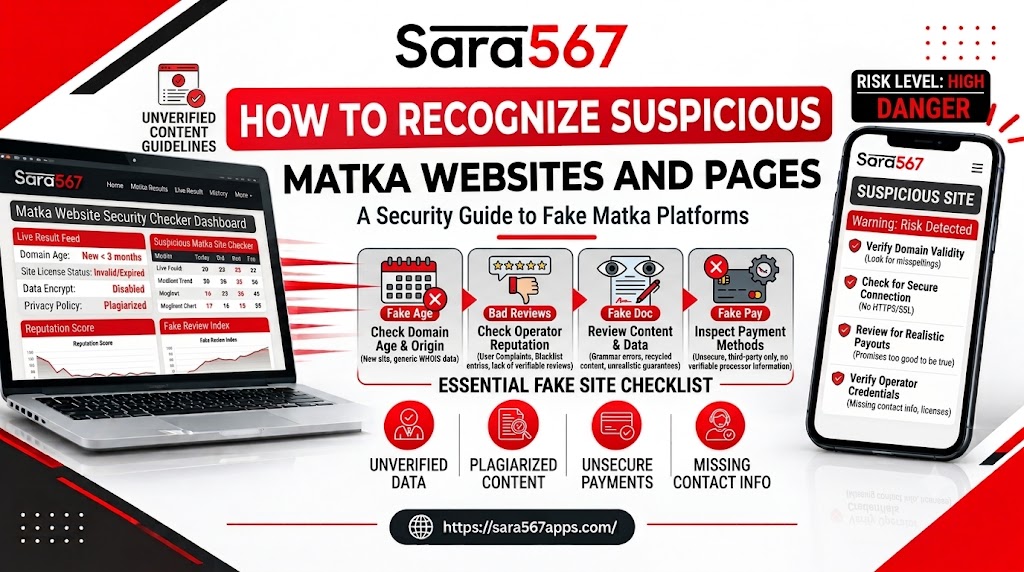
Suppose you are browsing the web searching for a day-wise result record or historical data. There is a high chance that you might come across a suspicious page masquerading as a legitimate information source. Fake Matka websites often utilize deceptive practices to lure in users searching for results. The design of a fake Matka page can appear identical to a genuine information portal—making it hard to differentiate between the two at first glance.
The key to avoiding deceptive practices lies in knowing how to recognize fake Matka sites. Some simple checks can unveil suspicious elements before you interact with malicious content.
What Makes a Matka Website Suspicious?
A suspicious website will rarely proclaim itself as unsafe. Instead, it will attempt to appear legitimate and trustworthy. Fake Matka portals, in particular, will adopt the design and layout of other websites in an effort to seem like a known and reliable source of information. Simply looking at the design of the page is not sufficient to identify suspicious Matka websites. You should look for other warning signs to reveal malicious intent.
Warning signs that point to fake Matka websites include the following:
- Unusual web address
- Too many pop-up ads
- Redirect attempts
- Forced downloads
- Unrealistic promises
- Poorly structured pages
Suspicious redirects and pop-up ads are some of the most common telltale signs that the website is not safe. Multiple questionable elements, however, can point to a much larger issue. If one or more of these warning signs appear on a page, it is best to leave the page immediately.
Double-check the Web Address
Your browser’s address bar is one of the best tools for identifying suspicious websites. Some deceptive websites use web addresses that are deliberately misspelled to appear similar to the real thing. This practice is commonly known as typo-squatting. You should look out for suspicious variations of the following:
- Misspelled web addresses
- Additional or modified words in the domain name
- Unusual domain extensions
- Subdomain manipulation
Typo-squatting is the process of making minor changes to a web address, usually in an attempt to lure people into visiting a certain web page. This can be done for various reasons, even for legitimate Matka information sites. It is important to be careful when you view a website page address to avoid going to a deceptive page. If you know the web address of a website page you can also type the address and/or bookmark to ensure that you do not end up on a deceptive website.
Watch Out for Unrealistic Promises
One of the most common signs of fake Matka sites is an unrealistic promise. If you come across an online resource that offers you open and close numbers guaranteed, expect deception. Suspicious sites will use exaggerated language to attract scammers looking for daily results:
- “100% Prediction Open and Close Numberâ€
- “Official Secret Direct Resultâ€
- "Guaranteed Sure-Shot Pass"
- "No-loss Daily Prediction Formulaâ€
The promise of secret formulas and guaranteed results is a clear indication that the website is not legitimate. Past records of results, on the other hand, can provide an accurate display of the day’s Matka numbers. Always be aware of suspicious claims that do not align with reality. Promises of guaranteed results should be treated as warning signs that expose fake Matka sites.
Beware of Unwanted Pop-up Ads
Watch out for suspicious redirects when browsing Matka websites.
Most legitimate portals have pop-up ads disabled by default. A suspicious Matka page, on the other hand, will have pop-up notifications enabled. You can test this by clicking on random articles, charts, or other content. On a legitimate information source, clicking on an element should open up a relevant page or section. Suspicious Matka portals, however, can use pop-up ads to redirect you to other pages. Look out for the following:
- Redirects after clicking on an element
- Suddenly appearing pop-up ads
- Requests to enable notifications to view information
- Redirects after clicking on an element
Several deceptive practices in Matka websites use pop-up ads to redirect you to other pages. Always be careful when interacting with content on suspicious websites. If a pop-up ad appears on your screen, avoid clicking on any of the buttons. Simply closing the tab or window is the safest option. Some fake Matka portals will use pop-up ads to promote fake apps or other malicious content. Pop-up ads are best avoided altogether when browsing Matka websites.
Avoid Unwanted Downloads
Be wary of fake Matka portals that force you to download an APK file in order to view information. A legitimate Matka information portal does not require you to download an application in order to view the day’s results, historical records, or related content. Always be wary of the following:
- Files that need to be downloaded before viewing web content
- Suspicious file types such as APKs, ZIPs, or other program files
- Warnings from your device about the file source
Forced downloads can pose serious security risks. If you are asked to download an APK file in order to view the day’s Matka results, leave the website immediately. Unwanted downloads can compromise your device, files, and other sensitive information. Use a browser to view Matka-related information, such as the daily results and charts. APK downloads should only be used for trusted applications. Always make sure to download APK files from official app stores.
Check the Overall Quality of Information
Website safety extends beyond pop-up ads, redirects, or unwanted downloads. You should also pay close attention to the information provided on the website. Suspicious Matka portals, for instance, will sometimes scrape content from other sources. The dates, information, and other elements may be inconsistent compared to other Matka websites:
- Inconsistent or poorly presented information
- Missing or extra dates and other data points
- Poorly presented charts that are difficult to read
- Inaccurate or misleading information, including the explanation of terms and charts
A legitimate Matka information source will present information in a clear and organized manner. Always check the quality of information before using a Matka website. Suspicious Matka portals will have inconsistent and poorly presented information that is significantly different compared to other Matka websites.
Protect Personal Information
Viewing day-wise results or historical data should not require entering sensitive information. One-time passwords, online banking details, and other sensitive data should never be entered on a Matka website unless it is an official and trusted portal. Never share the following on an unfamiliar Matka website:
- One-time password (OTP)
- Online banking or UPI PIN
- Debit or credit card details
- Any government-issued ID or other sensitive information
If a suspicious Matka website asks you to enter an OTP or other sensitive information, leave the page immediately. Your financial security and overall privacy should not be compromised simply to view Matka results. Always keep personal information private and only use trusted Matka portals.
Website Safety Checklist
Use the following checklist when browsing an unknown or suspicious website:
| Suspicious Element | What It Means | What to Do |
|---|---|---|
| Altered or strange web address | May indicate a typo-squatted or deceptive website | Check the website address |
| Endless redirection attempts | Indicates that the page is unsafe or attempting to promote unwanted content | Close the tab or leave the page |
| “Guaranteed†promises or claims | A sign of suspicious Matka portals | Avoid websites that promise guaranteed results |
| Forced downloads | Indicates that the page is unsafe or attempting to promote unwanted content | Cancel the download and leave the page |
| Unwanted request for OTP, banking PIN, or other sensitive information | Attempts to access sensitive information | Avoid websites that request sensitive information |
| Browser security warning popup | Indicates that the page is unsafe or attempting to promote unwanted content | Leave the suspicious page |
How to Browse the Internet More Safely
There are a few simple best practices that can make everyday browsing safer. Always check the web address of a website before visiting or interacting with it. You should also bookmark trusted websites instead of following links, especially on suspicious pages. Never believe in promises of “100%†guarantees or unrealistic results. Always avoid unwanted downloads and pop-up ads, especially on suspicious sites. Enable browser security features to block pop-up ads and warn you of suspicious pages. Double-check historical records or day-wise results, especially when browsing suspicious Matka portals. If possible, use other trusted sources such as Sara 567 to confirm the accuracy of web content.
Conclusion
You can identify fake Matka websites by looking at several signs and security features that are necessary for secure surfing. Unusual addresses, redirects, pop-up windows, forced downloads of files, promises of quick results, insufficient data, and the requirement for confidential information indicate that a site is untrustworthy.
Users should pay attention to the security of the website and the reliability of the information when they visit the site. For example, it is undesirable to provide confidential information such as OTP code, banking details, UPI PIN, or biometric data on an unreliable site. In addition, it is necessary to abandon suspicious sites and delete their data from the device if they contain advertising, unwanted downloads, or other threats. Users should check all the available data on the site and deal with such problems as non-standard addresses and redirects. The website offering Matka results should not mislead you with beautiful words or guarantees of absolute safety.
A responsible approach and an awareness of potential problems help protect visitors’ personal information and financial data. You should be wary of any inattention to security and privacy when on a site with Matka results, looking at odd symbols or addresses that don’t seem right. This way, you will avoid visiting suspicious sites offering to show you the results of the draw safely.
Also Read: Kalyan Matka Guide — Timings, Charts & How Results Work
FAQ
1. How can I identify a fake Matka site?
Look out for suspicious elements such as altered web addresses, endless redirection attempts, unwanted pop-up ads, forced downloads, and unrealistic promises. A legitimate Matka portal will not ask for sensitive information such as OTP, online banking details, or other private information. If a website asks you to enter an OTP or other sensitive information, leave the page immediately.
2. Are websites promising guaranteed Matka results reliable?
No. Any website promising 100% accurate results or guaranteed numbers is most likely a scam. Always avoid suspicious Matka portals that promise unrealistic results.
3. Is it safe to install an APK from an unknown website?
It can be unsafe to install an APK from an unknown website. APK downloads should only be used for trusted applications.
4. What should I do if a website asks for my OTP?
Do not share the OTP with the website. One-time passwords are used to secure private information, and a website offering public Matka results should not ask for it.
5. What should I do if a website keeps redirecting me?
Close the tab or leave the page. Avoid clicking on any suspicious buttons, especially those requesting permission to send notifications or download files. If the issue persists, clear your browser’s cache/history or change your browser settings.