
Time Bazar Matka: Timing & Strategy Guide
Time Bazar Matka: Timing & Strategy Guide
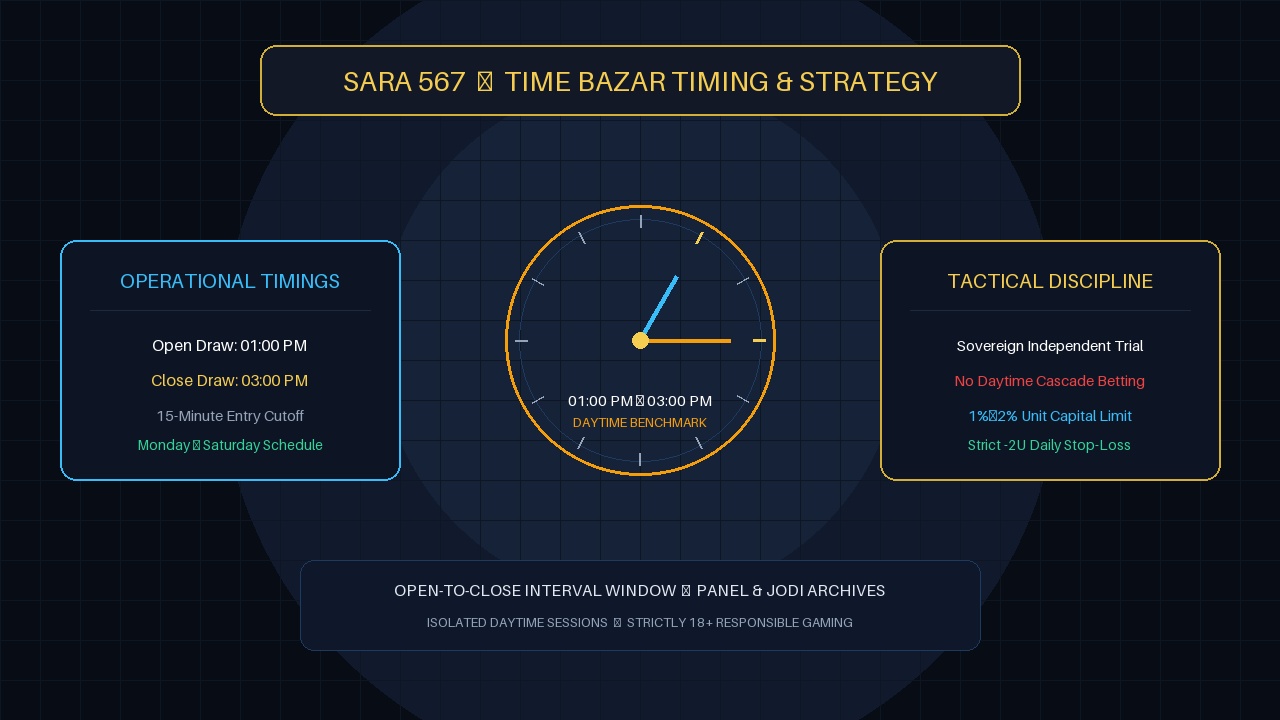
While evening and late-night markets such as Kalyan Night, Milan Night, and Rajdhani Night command enormous prime-time volume, the national Matka ecosystem springs to life much earlier in the day. Standing proudly as the undisputed king of the daytime speculative circuit, Time Bazar serves as the opening benchmark that sets the analytical tone for the entire trading calendar.
For researchers and participants, navigating this premier morning-to-afternoon market requires more than casual guesses. Conducting an objective time bazar matka guide study requires understanding official time bazar open close declaration windows, implementing disciplined time bazar strategy frameworks, and interpreting historical records on the time bazar chart.
Building upon our foundational analyses of Kalyan Matka Guide, Milan Day & Night Guide, Rajdhani Matka Analysis, and Bankroll Management for Matka Players, this comprehensive guide delivers an exhaustive operational breakdown of Time Bazar on Sara 567.
1. The Daytime Anchor: Origins and Role of Time Bazar
Originating during the industrial expansion of Bombay’s textile mill districts, Time Bazar was created to accommodate merchants, mill workers, and local traders whose operational routines centered around lunch hours and midday trade pauses.
┌────────────────────────────────────────────────────────────────────────┐
│                   THE DAILY MARKET TIMELINE SEQUENCE                   │
├─────────────────┬───────────────────┬──────────────────────────────────┤
│ Market Bazar    │ Active Window     │ Operational Sequence             │
├─────────────────┼───────────────────┼──────────────────────────────────┤
│ 1. Time Bazar   │ 01:00 PM – 03:00 PM│ • Daytime anchor benchmark        │
│                 │                   │ • Inaugurates major daily bazars │
├─────────────────┼───────────────────┼──────────────────────────────────┤
│ 2. Milan Day    │ 03:00 PM – 05:00 PM│ • Mid-afternoon bridge session   │
├─────────────────┼───────────────────┼──────────────────────────────────┤
│ 3. Kalyan Day   │ 04:10 PM – 06:10 PM│ • Prime afternoon flagship       │
├─────────────────┼───────────────────┼──────────────────────────────────┤
│ 4. Night Bazars │ 09:00 PM – 11:45 PM│ • Milan Night & Rajdhani Night   │
└─────────────────┴───────────────────┴──────────────────────────────────┘
Because it declares outcomes earlier than any other tier-one national market, Time Bazar draws heavy analytical scrutiny. However, a major misconception among novices is that Time Bazar numbers dictate or influence the afternoon results of Kalyan. In reality, Time Bazar operates as a sovereign, statistically independent system.
2. Official Operating Timings and Cutoff Windows
Punctual execution is critical when following Time Bazar. Digital platforms and authorized bookmakers enforce strict cutoff buffers prior to official declarations:
| Session Phase | Official Declaration Time | Entry Cutoff Buffer | Operational Rule |
|---|---|---|---|
| Time Bazar Open | 01:00 PM | 12:45 PM – 12:50 PM | 3-digit Open Pana and unit Single Ank declared |
| Time Bazar Close | 03:00 PM | 02:45 PM – 02:50 PM | 3-digit Close Pana declared; complete Jodi formed |
Note: Operating schedules run Monday through Saturday. Time Bazar typically pauses on Sundays. Sara 567 publishes verified updates if holiday timing changes occur.
The Two-Hour Interval Advantage
The two-hour gap between Open (01:00 PM) and Close (03:00 PM) offers a unique tactical window. Participants can study the declared Open Ank and assess complementary Cut Anks and Family Jodi quadrants before close entries lock.
3. Anatomy of a Time Bazar Draw: Decoding the Result
Time Bazar follows the standard 8-digit composite format used across all premier Indian markets:
                       TIME BAZAR RESULT COMPOSITION
                      ┌───────┬─────────┬───────┐
                      │  OPEN │   JODI  │ CLOSE │
                      │  PANA │         │  PANA │
                      ├───────┼─────────┼───────┤
                      │  236  │    15   │  168  │
                      └───────┴─────────┴───────┘
Let us break down the underlying arithmetic step by step:
-
Step 1: The Open Pana (236)
Three ascending digits ($2 \le 3 \le 6$).
$\text{Sum} = 2 + 3 + 6 = 11$
Taking the unit digit: $\text{Open Single Ank} = 11 \pmod{10} = 1$ -
Step 2: The Close Pana (168)
Declared at 03:00 PM, consisting of three ascending digits ($1 \le 6 \le 8$).
$\text{Sum} = 1 + 6 + 8 = 15$
Taking the unit digit: $\text{Close Single Ank} = 15 \pmod{10} = 5$ -
Step 3: The Combined Jodi (15)
Merging Open Ank ($1$) with Close Ank ($5$) creates the final Jodi outcome: 15.
The complete official ledger entry is published as 236 - 15 - 168.
4. Comparative Benchmark: Time Bazar vs. Kalyan vs. Milan Day
| Feature | Time Bazar | Kalyan Matka | Milan Day |
|---|---|---|---|
| Time Window | 01:00 PM – 03:00 PM | 04:10 PM – 06:10 PM | 03:00 PM – 05:00 PM |
| Market Role | Early daytime anchor | Flagship national benchmark | Afternoon bridge |
| Liquidity Profile | High daytime retail participation | Maximum national volume | High West & Central participation |
| Pana Distribution | Standard 220-Pana set | Standard 220-Pana set | Standard 220-Pana set |
| Operating Days | Monday – Saturday | Monday – Saturday | Monday – Saturday |
5. Technical Strategy & Chart Analysis for Time Bazar
When analyzing historical ledgers on Sara 567 Charts, apply these structured analytical methods:
┌────────────────────────────────────────────────────────────────────────┐
│                   TIME BAZAR ANALYTICAL FRAMEWORK                      │
├────────────────────────────┬───────────────────────────────────────────┤
│ Analytical Technique       │ Practical Application                     │
├────────────────────────────┼───────────────────────────────────────────┤
│ 1. Open-to-Close Tracking  │ Evaluating historical correlation between │
│                            │ Open Ank and complementary Close totals   │
├────────────────────────────┼───────────────────────────────────────────┤
│ 2. Single vs Double Panas  │ Monitoring natural 54.5% SP vs 40.9% DP   │
│                            │ baseline ratios across 4-week cycles      │
├────────────────────────────┼───────────────────────────────────────────┤
│ 3. Family Jodi Coverage    │ Utilizing 8-number Family clusters to     │
│                            │ cushion against close variance shifts     │
├────────────────────────────┼───────────────────────────────────────────┤
│ 4. Trial Independence      │ Strictly avoiding the assumption that     │
│                            │ Time Bazar dictates afternoon bazars      │
└────────────────────────────┴───────────────────────────────────────────┘
The Cut Ank Principle in Daytime Sessions
Every digit possesses a natural complement adding 5 modulo 10: $0 \leftrightarrow 5, \quad 1 \leftrightarrow 6, \quad 2 \leftrightarrow 7, \quad 3 \leftrightarrow 8, \quad 4 \leftrightarrow 9$
In our sample outcome (15), notice how the Close Ank ($5$) is the Cut partner of the Open sum ($10 - 5 = 5$). Studying these complementary occurrences on the Time Bazar Chart helps researchers observe historical variance clustering objectively.
6. Bankroll Management: Guarding Against the "Daytime Cascade"
The greatest psychological danger in Time Bazar is its early daytime timing. When a player suffers a loss at 03:00 PM, an intense emotional temptation arises: "I still have Milan Day, Kalyan, and Night bazars to win it back."
This psychological impulse is called the Daytime Cascade, and it is the single most common cause of catastrophic bankroll wipeouts.
┌────────────────────────────────────────────────────────────────────────┐
│                  AVOIDING THE DAYTIME CASCADE TRAP                     │
├────────────────────────────────┬───────────────────────────────────────┤
│ Rule                           │ Enforcement Action                    │
├────────────────────────────────┼───────────────────────────────────────┤
│ 1. Session Isolation           │ Time Bazar capital must be completely │
│                                │ quarantined from afternoon budgets    │
├────────────────────────────────┼───────────────────────────────────────┤
│ 2. The 1%–2% Unit Cap          │ Maximum wager on Time Bazar must not  │
│                                │ exceed 1 to 2 units of total capital  │
├────────────────────────────────┼───────────────────────────────────────┤
│ 3. Strict -2U Stop-Loss        │ If you lose 2 units in Time Bazar,     │
│                                │ log out immediately. No Kalyan bets.  │
├────────────────────────────────┼───────────────────────────────────────┤
│ 4. Mandatory Cool-Down         │ Take a minimum 4-hour break before    │
│                                │ reviewing evening market ledgers      │
└────────────────────────────────┴───────────────────────────────────────┘
7. Sara 567: High-Speed Time Bazar Data Infrastructure
Maintaining accurate records requires pristine digital tools free from biased prediction schemes or delayed conduits:
- Unbroken Time Bazar Archives: Study comprehensive historical Jodi Charts and Panel Charts with complete date-wise records.
- Instant Live Synchronization: Real-time result publishing on our Live Results dashboard the second outcomes are officially confirmed.
- Educational Frameworks: Explore complete game rules and mathematical formulas via our How to Play Satta Matka tutorial.
8. Responsible Gaming & Risk Governance (Strictly 18+)
Strategic chart analysis is an educational exploration of past statistical records, never a guarantee of financial return:
- House Advantage Reality: All Matka payout formats carry an inherent operator house edge (~10%). Over thousands of trials, negative expected value ($EV < 0$) cannot be eliminated.
- Independent Events: Every draw is an independent random event. Past Time Bazar records have no gravitational pull on future draws.
- Strict 18+ Underage Restriction: Access is strictly limited to legal adults. Never gamble with money needed for rent, groceries, healthcare, or family needs.
- Problem Gambling Assistance: If your market participation becomes difficult to control, seek immediate professional help from Gamblers Anonymous (gamblersanonymous.org). Consult our Responsible Gambling Guidelines, Terms of Service, and Disclaimer.
Frequently Asked Questions (FAQ)
What is Time Bazar in Satta Matka?
Time Bazar is a premier daytime Matka market that operates from early afternoon (01:00 PM to 03:00 PM), serving as the opening benchmark for major daily national speculative circuits.
What are the official open and close timings for Time Bazar?
Time Bazar Open declares at 01:00 PM, and Time Bazar Close declares at 03:00 PM, operating Monday through Saturday.
Does Time Bazar's result influence afternoon markets like Kalyan?
No. Time Bazar operates as a sovereign, statistically independent system. Outcomes from Time Bazar have zero physical or mathematical correlation with Kalyan, Milan, or Rajdhani results.
How is the Time Bazar Jodi calculated?
The Jodi is formed by taking the unit digit (modulo 10) of the Open 3-digit Pana sum and combining it with the unit digit of the Close 3-digit Pana sum. For example, Open Pana 236 (Sum 11 $\rightarrow$ Ank 1) and Close Pana 168 (Sum 15 $\rightarrow$ Ank 5) produce Jodi 15.
What is the biggest mistake beginners make in Time Bazar?
The biggest mistake is the "Daytime Cascade"—using subsequent afternoon markets (Milan Day, Kalyan) to chase losses incurred during the early Time Bazar session.
Where can I access verified Time Bazar charts and live updates?
You can study verified, comprehensive historical Jodi and Panel records and track live declarations in real time on Sara 567.
Explore Corresponding Market Charts & Verification Tools
Verify real-time numbers, track open/close records, and analyze weekly trends on our informational dashboard.