
The Psychology of Matka Betting
The Psychology of Matka Betting
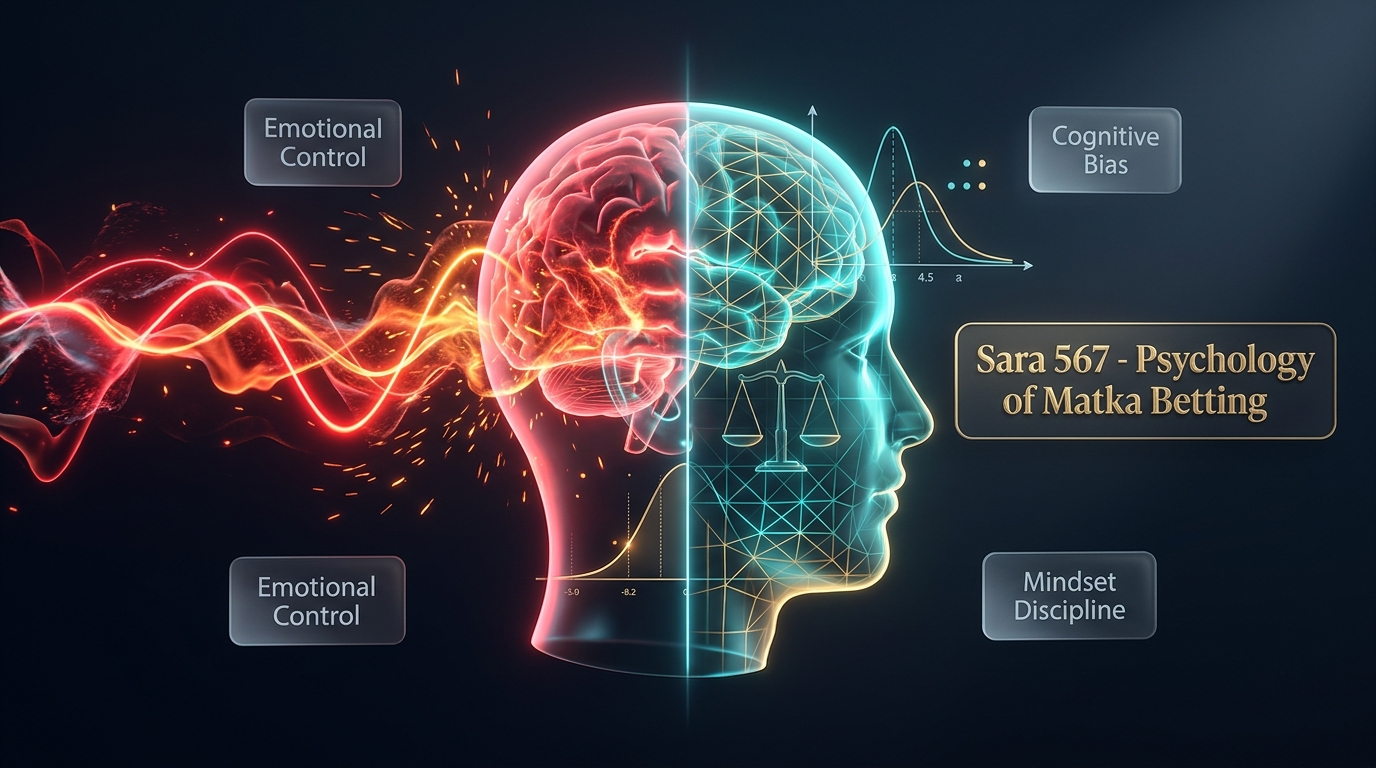
While textbooks and tutorials focus extensively on formulas, single digits, and panel reading, seasoned participants know that market games are 20% mathematics and 80% behavioral psychology. Understanding the psychology of matka betting is the ultimate differentiator between participants who maintain financial stability and those whose capital is quickly depleted by emotional turbulence.
Whether dealing with the euphoria of an unexpected win or the frustration of a near-miss, mastering your betting mindset, exercising strict emotional control gambling, and recognizing subconscious cognitive bias betting traps are essential skills for anyone reviewing daily market results.
Following our detailed analyses of Common Matka Mistakes, Responsible Gambling Practices, and Mathematical Odds, this guide delves into the neuroscience and behavioral economics governing player decisions on Sara 567.
1. The Neurochemistry of the Draw: Dopamine and the Variable Reward Loop
To master your behavior, you must first understand the biological engine driving your impulses: dopamine.
Contrary to popular belief, dopamine is not simply released when you win; it surges most intensely during the anticipation of an uncertain outcome. In behavioral psychology, this is known as a variable ratio schedule of reinforcement—the exact same mechanism that makes social media feeds and speculative markets addictive:
- The Cue: Reviewing the morning market schedule on Sara 567.
- The Craving: High dopamine spike during the 15-minute anticipation window before Kalyan Open declares.
- The Outcome: Declaration occurs. If successful, a secondary euphoric burst reinforces the behavior. If unsuccessful, dopamine drops sharply, creating a neurological deficit that compels the brain to seek an immediate subsequent wager to restore balance.
The Dangerous "Near-Miss" Effect
Consider a scenario where a player wagers on Jodi 47, and the official draw declares Jodi 48:
- Logical Reality: The wager was 100% incorrect, losing the entirety of the stake.
- Neurological Reaction: Functional MRI brain scans reveal that the human brain interprets a near-miss almost identically to a victory. The mind whispers, "I was so close! My system is working; I just need one more try."
Recognizing that near-misses are mathematical failures—not subtle validations—is the first critical step toward emotional mastery.
2. The Four Cognitive Biases That Sabotage Matka Players
Every human brain relies on mental shortcuts (heuristics) to make rapid decisions. In speculative number markets, however, these cognitive shortcuts distort reality into dangerous illusions.
┌────────────────────────────────────────────────────────────────────────┐
│               FOUR COGNITIVE BIASES IN NUMBER SPECULATION              │
├───────────────────────┬────────────────────────────────────────────────┤
│ Bias Name             │ Psychological Trap                             │
├───────────────────────┼────────────────────────────────────────────────┤
│ 1. Illusion of Control│ Believing personal rituals or "feelings"       │
│                       │ influence completely randomized draws.         │
├───────────────────────┼────────────────────────────────────────────────┤
│ 2. Confirmation Bias  │ Remembering one big win from three months ago  │
│                       │ while conveniently forgetting 25 routine losses│
├───────────────────────┼────────────────────────────────────────────────┤
│ 3. Loss Aversion      │ The psychological pain of losing ₹1,000 is     │
│    (Prospect Theory)  │ twice as intense as the pleasure of winning it.│
├───────────────────────┼────────────────────────────────────────────────┤
│ 4. Recency Bias /     │ Assuming recent winning streaks will continue  │
│    Hot Hand Fallacy   │ uninterrupted into future independent trials.  │
└───────────────────────┴────────────────────────────────────────────────┘
1. The Illusion of Control
In games of pure chance, participants often convince themselves that their personal involvement alters probability. Examples include selecting digits based on birthdays, lucky vehicle numbers, or proprietary "secret formulas." Acknowledging that physical card draws or digital randomizers are entirely indifferent to human rituals restores objective clarity.
2. Confirmation Bias
When reviewing past Matka Charts, human memory acts like a magnifying glass for positive memories and a sponge for negative ones. Players vividly recall their 90:1 Jodi triumph while completely ignoring the weeks of gradual bankroll erosion that preceded it.
3. Loss Aversion (Prospect Theory)
Pioneering behavioral economists Daniel Kahneman and Amos Tversky demonstrated that humans experience losses far more acutely than equivalent gains. Because the pain of losing ₹1,000 feels twice as severe as the satisfaction of winning ₹1,000, players take irrational, outsized risks (such as doubling down on late-night markets) simply to avoid acknowledging a financial deficit.
4. The "Hot Hand" Fallacy
Following two consecutive successful days, a participant assumes they possess "momentum." In mathematical probability, independent random events have no memory. A winning streak does not increase the odds of tomorrow's draw being favorable.
3. The Anatomy of the "Tilt": How Emotional Control Collapses
In professional poker and financial trading, the term "tilt" describes a state of emotional frustration where rational decision-making is completely hijacked by anger or panic:
[Unexpected Loss] ──► [Denial & Anger] ──► [Loss of Discipline] ──► [Reckless Over-Staking]
The Amygdala Hijack
When faced with an unexpected loss, the brain's primitive emotional center (the amygdala) overrides the rational prefrontal cortex. Symptoms of entering the tilt include:
- A rapid heartbeat and hot flushing.
- An urgent obsession with checking the next upcoming market (e.g., jumping from afternoon Kalyan directly into evening Milan Night).
- Abandoning the established 1% to 2% unit staking limit in favor of massive, impulsive wagers.
The 24-Hour Cool-Down Protocol
To prevent a temporary tilt from destroying your personal finances, adopt a mandatory rule: After any session with two consecutive missed wagers, institute an unbreakable 24-hour moratorium. Close your tracking tabs, disengage from discussion forums, and allow your brain's neurochemistry to return to equilibrium.
4. The Professional Mindset: Decoupling Process from Outcome
The hallmark of a mature, analytical participant is separating decision quality from outcome quality:
- Good Decision, Bad Outcome: You establish a strict 1-unit stake on a Single Ank with high mathematical value within your monthly entertainment allowance. The draw misses. This was still an excellent decision because your risk was contained.
- Bad Decision, Good Outcome: You panic, wager half your monthly savings on an obscure Full Sangam, and miraculously win. While profitable today, this was a disastrous decision that reinforces reckless habits and virtually guarantees long-term ruin.
Focus obsessively on your process—bankroll governance, objective study of How to Play Satta Matka, and disciplined stop-losses—rather than obsessing over day-to-day fluctuations.
5. Comparison: Emotional Gambler vs. Disciplined Analyst
| Feature | The Emotional Gambler | The Disciplined Analyst |
|---|---|---|
| Primary Motivation | Escaping financial trouble or seeking adrenaline | Intellectual curiosity and controlled recreation |
| Response to a Loss | Frustration, revenge betting, chasing losses | Calm acceptance; logs result into ledger |
| Response to a Win | Overconfidence, increasing wager sizes recklessly | Modest celebration; enforces take-profit boundaries |
| Chart Reading Style | Searches for "due" numbers and magical leaks | Analyzes long-term variance and frequency patterns |
| Staking Strategy | Erratic, all-in spikes based on intuition | Fixed 1%–2% unit staking from discretionary income |
| Session Frequency | Compulsive; checks markets morning till midnight | Restricted to 2–3 predetermined days per week |
6. How Sara 567 Fosters a Calm, Rational Environment
Unlike chaotic tipster forums and predatory social media groups that deliberately trigger fear-of-missing-out (FOMO), Sara 567 provides a serene, data-centric portal:
- Neutral, Unbiased Data: Our Jodi Charts and Panel Charts present cold, empirical records without sensationalized headlines or pressure tactics.
- Instant Result Transparency: Clear, zero-latency declarations eliminate the anxious ambiguity that causes panicked decision-making.
- Educational Foundation: In-depth strategy and probability guides teach players the true mathematical house edge, empowering users with informed realism.
7. Player Protection & Self-Assessment Checklist (Strictly 18+)
Ask yourself these four diagnostic questions once a month:
- Do I ever feel an urgent compulsion to win back money lost earlier in the day?
- Have I ever wagered money that was allocated for rent, groceries, family savings, or bills?
- Do I conceal the amount of time or money I spend reviewing market numbers from loved ones?
- Do I experience anxiety, anger, or mood swings when unable to check live draw timings?
If you answered "Yes" to two or more questions, take an immediate, structured break. Review our Responsible Gambling Practices, consult our Terms of Service and Disclaimer, or contact confidential helplines like Gamblers Anonymous (gamblersanonymous.org).
Frequently Asked Questions (FAQ)
Why is psychology considered more important than formulas in Matka?
Because even the most sophisticated chart analysis cannot overcome emotional breakdowns like chasing losses, revenge betting, or abandoning bankroll limits. Disciplined psychological control protects your capital when mathematical variance turns negative.
What is the "Near-Miss Effect" in number markets?
The Near-Miss Effect occurs when an outcome falls just one digit away from your selection (e.g., picking 47 when 48 is declared). Brain scans show this triggers dopamine surges similar to winning, misleading players into thinking they were "almost right" when they mathematically lost.
How does dopamine affect betting behavior?
Dopamine spikes during the anticipation of uncertain outcomes, not just when winning. When a draw loses, dopamine crashes, creating an urgent physiological craving to place another wager immediately to regain emotional equilibrium.
What is the best way to stop emotional "tilt"?
Implement a mandatory 24-hour cool-down rule after two consecutive losses or upon reaching your predetermined daily loss ceiling. Physically stepping away from screens breaks the hormonal feedback loop.
What is the difference between outcome quality and decision quality?
Decision quality measures whether you adhered to strict bankroll limits, risk control, and rational analysis. Outcome quality simply measures whether you won or lost. Focusing on decision quality ensures long-term emotional and financial safety.
Where can I study neutral, historical Matka records without high-pressure marketing?
Sara 567 provides clean, distraction-free historical Matka Charts and educational articles designed to provide objective, verified information to all enthusiasts.