
Regional Variations of Satta Matka Across India
Regional Variations of Satta Matka Across India
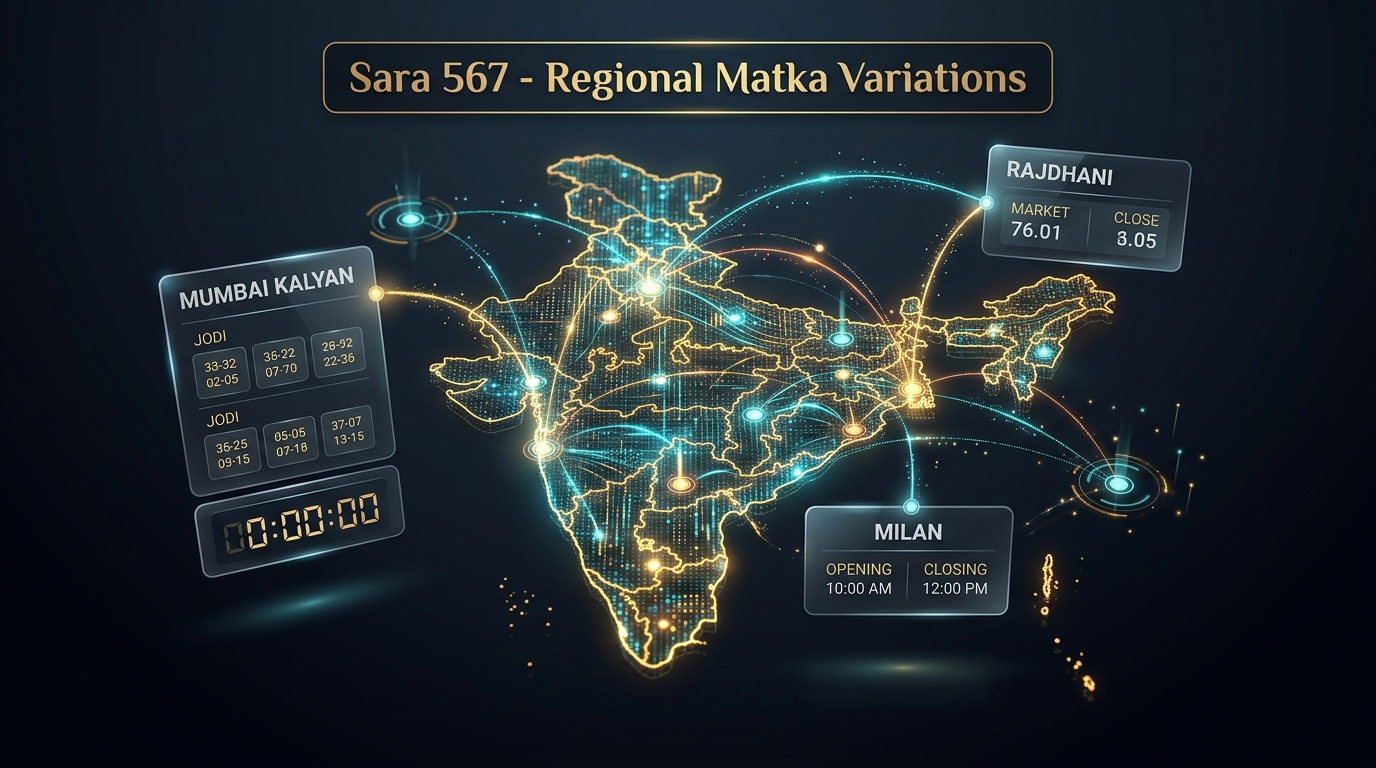
While Satta Matka originated in the bustling cotton exchange alleys of central Mumbai during the early 1960s, the game did not remain confined to Maharashtra. Over the decades, number-based speculative games expanded across the subcontinent, evolving into distinct state-level ecosystems and bazars. Today, understanding regional matka variations is essential for any enthusiast analyzing market schedules, result formats, and ledger structures.
From the foundational two-session draws of Western India to the rapid multi-round systems of the East and the high-volume evening markets of the North, satta matka markets in India reflect a fascinating mix of regional culture, shift work rhythms, and numerical traditions.
Following our detailed analyses of Satta Matka Basics, Chart Reading Techniques, and the Kalyan Matka Guide, this comprehensive guide explores how state matka games and local matka rules developed across India and how Sara 567 brings them together under a unified, transparent digital standard.
1. The Geographic Epicenters of Matka Across India
Different parts of India developed their own unique relationship with speculative number markets. Here is how the geographic landscape breaks down:
┌────────────────────────────────────────────────────────────────────────┐
│               REGIONAL MATKA LANDSCAPE ACROSS INDIA                   │
├───────────────────┬───────────────────┬────────────────────────────────┤
│ Region            │ Major Bazars      │ Core Characteristics           │
├───────────────────┼───────────────────┼────────────────────────────────┤
│ Western India     │ Kalyan, Milan,    │ • Foundational 2-draw format   │
│ (MH & Gujarat)    │ Main Bazar, Time  │ • Open & Close Pana + Jodi     │
│                   │                   │ • Deep historical 60-yr ledgers│
├───────────────────┼───────────────────┼────────────────────────────────┤
│ Northern India    │ Rajdhani, Delhi,  │ • Heavy evening/night focus    │
│ (Delhi, UP, RJ)   │ Gali, Disawer     │ • Direct Jodi & fast single Ank│
│                   │                   │ • Distinct midnight schedules  │
├───────────────────┼───────────────────┼────────────────────────────────┤
│ Eastern India     │ Kolkata FF,       │ • Rapid multi-bazi intervals   │
│ (WB & East)       │ Bengal Bazars     │ • Up to 8 rounds per day       │
│                   │                   │ • High-frequency single Ank    │
├───────────────────┼───────────────────┼────────────────────────────────┤
│ Southern India    │ Sridevi, Supreme, │ • Morning & daytime sessions   │
│ (KA, AP, TN)      │ Madhur Morning    │ • Standardized Mumbai math     │
│                   │                   │ • Early-afternoon closures     │
└───────────────────┴───────────────────┴────────────────────────────────┘
Western India (Maharashtra & Gujarat): The Traditional Benchmark
Western India is the spiritual and historical home of Matka. Pioneered by Kalyanji Bhagat (Worli Matka) and Ratan Khatri (New Worli), Mumbai established the classic mathematical framework:
- Three playing cards drawn twice daily.
- Sorted numerically into a three-digit Pana (Patti).
- Added together to yield a single-digit Ank.
- Combined to create the central two-digit Jodi.
Key Western markets include Kalyan, Milan Day, Milan Night, Main Bazar, and Time Bazar. Their schedules historically aligned with Mumbai's textile mill shifts and commercial trading hours.
Northern India (Delhi, Punjab, Rajasthan, Uttar Pradesh)
As textile and trading networks expanded along northern rail corridors, Matka adapted to the Northern lifestyle:
- Rajdhani Day & Night: Originally established as a tribute to the national capital corridor, Rajdhani follows standard Western Pana rules but features timings aligned with Northern business hours.
- Fast-Paced Jodi Formats (Disawer, Gali, Faridabad): Northern markets frequently emphasize direct 2-digit Jodi speculation without the elaborate three-digit Pana calculations typical of Kalyan or Milan. Many of these markets declare results late in the evening or early morning (e.g., 2:00 AM to 5:00 AM).
Eastern India (West Bengal & Kolkata): The Rapid-Interval Revolution
In Eastern India, particularly in Kolkata, the traditional once-or-twice daily draw structure was transformed into a high-frequency model known as Kolkata Fatafat (FF):
- Instead of waiting hours between Open and Close sessions, Kolkata FF operates 8 rapid rounds (Bazi) per day from morning until evening.
- Each round declares a single digit (0–9) and a 3-digit Patti.
- The emphasis is on immediate turnarounds, making it fundamentally different from the slow, analytical chart reading of Mumbai's long-term historical archives.
Southern & Central India (Karnataka, Madhya Pradesh, Andhra Pradesh)
In Southern and Central hubs, markets like Sridevi, Madhur Day/Night, and Supreme Day gained widespread popularity:
- These bazars adopt the exact mathematical formulation of Mumbai Matka but stagger their draw times across the morning and midday slots (e.g., 10:30 AM to 1:30 PM), filling the schedule gaps before Kalyan opens in the afternoon.
2. Comparative Matrix: Popular Regional Markets
To understand how individual bazars differ in their operational structure, review this side-by-side comparison:
| Market Name | Primary Region | Draw Timings (IST) | Draw Structure | Key Characteristic |
|---|---|---|---|---|
| Kalyan | Western (Mumbai) | 3:45 PM – 5:45 PM | Open Pana + Close Pana = Jodi | National benchmark; 60+ year archival depth |
| Main Bazar | Western (Mumbai) | 9:35 PM – 12:05 AM | Open Pana + Close Pana = Jodi | Premier late-night Western market |
| Milan Day / Night | Western (Mumbai) | 3:00 PM / 9:00 PM | Open Pana + Close Pana = Jodi | Established by Ratan Khatri; 6-day operations |
| Rajdhani Day / Night | Northern Corridor | 3:15 PM / 9:15 PM | Open Pana + Close Pana = Jodi | Favored across Delhi, UP, and Rajasthan |
| Time Bazar | Western / Central | 1:00 PM – 2:00 PM | Open Pana + Close Pana = Jodi | Midday market bridging morning and afternoon |
| Sridevi | Southern / Central | 11:35 AM – 12:35 PM | Open Pana + Close Pana = Jodi | Early-morning market popular across South India |
| Kolkata Fatafat | Eastern (West Bengal) | 8 Rounds Hourly | Rapid Patti + Single Ank | High-frequency 8-bazi format; no Jodi pairing |
3. Key Rule & Format Variations Across Markets
While all Matka games revolve around numbers from 0 to 9, regional variations alter several crucial mechanics:
A. Single Draw vs. Two-Session Pairing
- Traditional Western & National Bazars require two separate declarations (Open session and Close session). The two outer single digits merge to create the two-digit Jodi (e.g., Open Ank 4 + Close Ank 7 = Jodi 47).
- Rapid Regional Games (like Eastern FF) treat each round as a standalone mini-session. Results do not combine to form a composite Jodi over hours.
B. Panel / Patti Calculation Methods
In traditional markets across Maharashtra, Gujarat, and the South, three digits are strictly ordered in ascending value to form the Pana:
- Example: Digits 8, 2, 4 are automatically arranged as 248 (Single Pana).
- In some local Northern games, players can place straight bets on the direct two-digit outcome without calculating intermediate three-card sums.
C. Weekly Operational Schedules
- Standard markets (Kalyan, Rajdhani, Milan) operate Monday through Saturday, pausing on Sundays.
- Certain localized state markets operate 7 days a week, while specific government holiday closures vary depending on regional bank holidays.
4. Regional Chart Formats: How Archives Differ
Analytical players rely on historical data to track market performance. However, depending on the region, the layout of Matka Charts changes:
1. The Western Panel Chart Layout (The Industry Standard)
Adopted by Kalyan, Milan, and Rajdhani, this format features weekly rows with daily cells containing:
[Open 3-digit Pana]  [2-digit Jodi]  [Close 3-digit Pana]
      137                 14                 590
This comprehensive layout allows analysts to study single numbers, pairings, and triplet patterns simultaneously.
2. The Northern Jodi Ledger
Many Northern-focused record books strip away the three-digit Panas entirely, recording only the 2-digit Jodi across horizontal grids. This simplifies tracking for users who exclusively speculate on double-digit pairs.
3. Eastern Bazi Boards
Eastern multi-draw markets present daily tables arranged in columns labeled Bazi 1 through Bazi 8, displaying the single winning digit and its associated three-digit Patti for each rapid round.
5. The Digital Transformation: How Sara 567 Unifies Regional Data
Historically, tracking regional Matka variations was fraught with confusion. Players in Rajasthan had to wait for telephone updates from Mumbai, while enthusiasts in Kolkata relied on chalkboards in local tea stalls.
Today, Sara 567 standardizes and unifies data from all major regional bazars onto a single, high-speed platform:
- Centralized Timings Schedule: Clear, timezone-synchronized listings for Western, Northern, and Southern market openings and closures.
- Normalized Chart Ledgers: Consistent, verified Jodi Charts and Panel Charts formatted according to standardized mathematical rules.
- Zero-Latency Live Result Feeds: Real-time synchronization ensuring that whether you are checking afternoon Kalyan or evening Rajdhani Night, numbers appear without delay or manual distortion.
- Transparent Education: Clear, beginner-focused tutorials on How to Play Satta Matka and understand odds without falling prey to regional myths or fraudulent tipster channels.
6. Responsible Gaming & Legal Awareness
Engaging with regional market data requires maturity, clear financial boundaries, and strict legal awareness:
- State Regulatory Frameworks: Gambling legislation in India is governed at the state level. While the central Public Gambling Act of 1867 serves as an overarching baseline, states like Goa and Sikkim have regulated gaming frameworks, whereas Maharashtra and others enforce specific prohibitions. Always understand the legal framework of your jurisdiction.
- Strict 18+ Underage Restriction: Market analysis, chart viewing, and speculative activities are strictly limited to adults.
- Bankroll Discipline: Review our dedicated guide to Responsible Gambling Practices. Treat number analysis purely as recreational entertainment, apply the 1% to 2% unit budget rule, and never chase losses.
- Examine Platform Terms: Always consult our transparent Terms of Service and Disclaimer before participating.
Frequently Asked Questions (FAQ)
What are the primary regional variations of Satta Matka in India?
The main variations are Western markets (Kalyan, Milan, Main Bazar), Northern corridor games (Rajdhani Day/Night, Gali, Disawer), Southern daytime markets (Sridevi, Supreme), and Eastern rapid-round games (Kolkata Fatafat).
How does Kolkata Fatafat differ from Kalyan Matka?
Kalyan Matka is a classic two-session market (Open at 3:45 PM, Close at 5:45 PM) that produces a two-digit Jodi from two 3-digit Panas. Kolkata Fatafat is a rapid-interval game consisting of 8 separate rounds (Bazi) per day, where each round declares an individual single digit and Patti independently.
Why are draw timings different across various Indian Matka bazars?
Draw timings historically aligned with local commercial shifts, textile mill closing times, and regional daily routines. Staggered schedules also allow enthusiasts to follow different bazars sequentially from morning until midnight.
Are Pana calculation rules the same across all regional bazars?
In traditional bazars (Kalyan, Milan, Rajdhani, Sridevi), the mathematical formula is identical: 3 ascending digits are added, and the last digit of the sum becomes the Single Ank. Some northern street games, however, bypass Panas entirely and speculate directly on 2-digit Jodis.
Can strategies from Kalyan Matka be applied to Rajdhani or Milan?
Yes. Because Kalyan, Milan, and Rajdhani share the exact same mathematical probability structure (10 single Anks, 100 Jodis, 220 Panas), standard chart reading techniques and bankroll rules apply equally across all of them.
Where can I find verified live updates for different regional bazars?
Sara 567 provides real-time, zero-latency result updates and comprehensive historical chart archives for all premier Western, Northern, and Southern bazars in one unified dashboard.